

Lymphoma
If lymphoma is found and treated early, you have a good chance of getting better.
Click on the headings below to learn more.
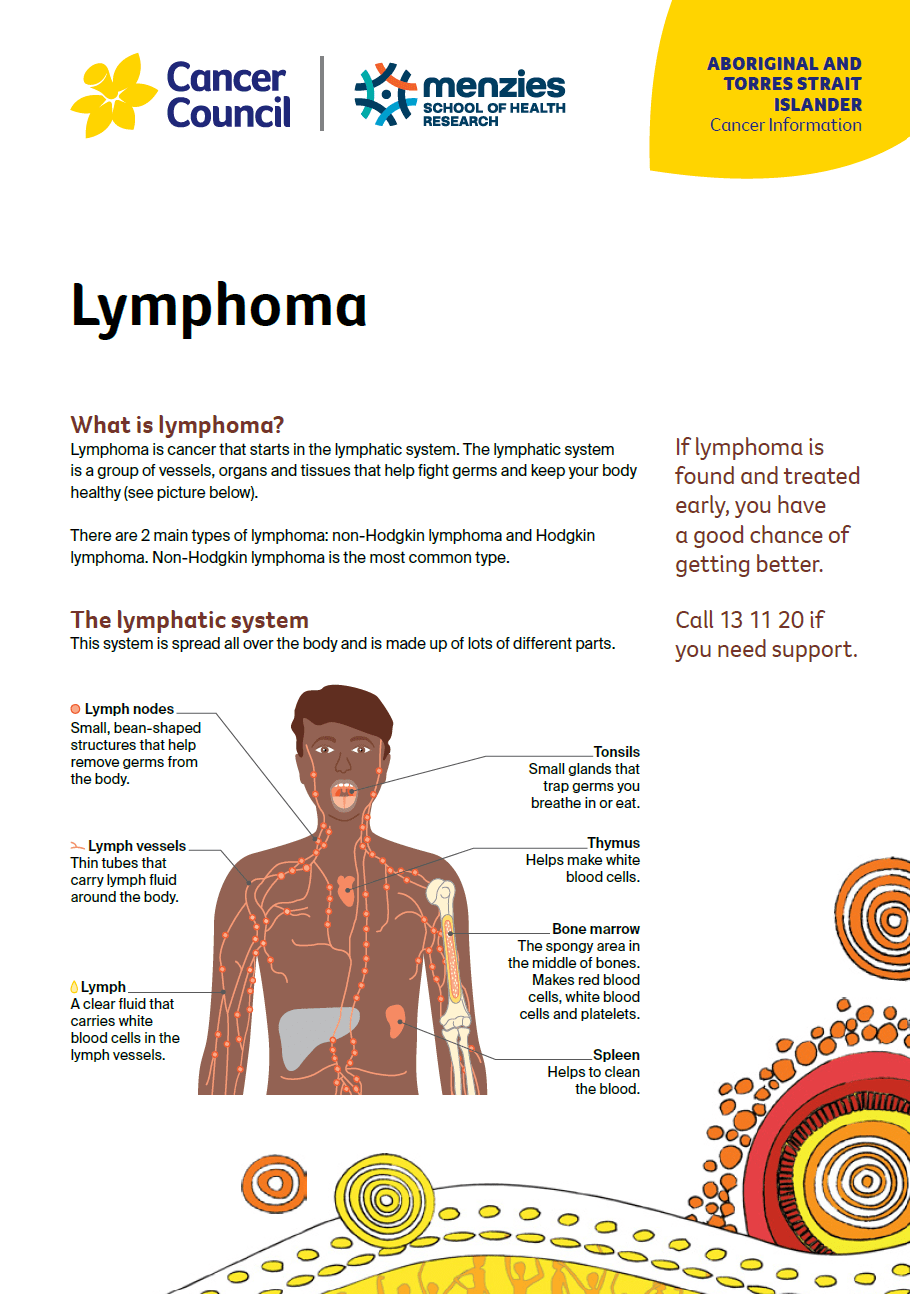
Lymphoma is cancer that starts in the lymphatic system. The lymphatic system is a group of vessels, organs and tissues that help fight germs and keep your body healthy (see picture below).
There are 2 main types of lymphoma: non-Hodgkin lymphoma and Hodgkin lymphoma. Non-Hodgkin lymphoma is the most common type.
Sometimes, cancer starts in a different organ in the body and spreads to the lymph nodes. This is not lymphoma. Lymphoma is only when the cancer starts in the lymphatic system.
The lymphatic system
This system is spread all over the body and is made up of lots of different parts.
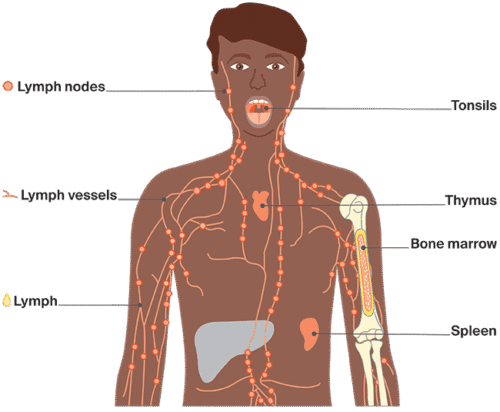
Lymph nodes – Small, bean-shaped structures that help remove germs from the body.
Lymph vessels – Thin tubes that carry lymph fluid around the body.
Lymph – A clear fluid that carries white blood cells in the lymph vessels.
Tonsils – Small glands that trap germs you breathe in or eat.
Thymus – Helps make white blood cells.
Bone marrow – The spongy area in the middle of bones. Makes red blood cells, white blood
Spleen – Helps to clean the blood.
You can have lymphoma without noticing anything is wrong. Warning signs may include:
- a lump in your neck, under your arm or in your groin that doesn’t hurt (called enlarged lymph nodes)
- getting sick more often
- sweating a lot, especially at night
- losing weight without trying.
These signs don’t always mean you have lymphoma, but it’s important to see your doctor if you notice these or other symptoms. Your doctor will do some tests to work out if you have cancer or what the problem is.
First, your doctor will feel the lymph nodes in your neck, underarms or groin for signs of swelling. You’ll then have other tests, including:
- Biopsy – This is the main test for lymphoma. Medicine is used to numb the area of your body, and a tiny piece of the lymph node is taken out. This is sent to the lab for testing. You may also have a biopsy of your bone marrow to check if the lymphoma has spread to the bones. Biopsies can be done in different ways. Your doctor will talk to you about this.
- Scans – A CT (computerised tomography) scan can take detailed pictures of the inside of your body. You may also have a PET (positron emission tomography) scan, which uses a special dye to help show up cancer cells.
- Ultrasound – This is a different type of scan that uses soundwaves to take pictures of the inside of the body.
- Chest x-ray – Some people need to have an x-ray to see if the lymphoma has spread to lymph nodes in their chest or lungs.
- Blood tests – Some blood will be taken from your arm and tested to check your blood cells and how well organs, like your kidneys, are working.
If you feel uncomfortable having a test, ask a nurse, Aboriginal and Torres Strait Islander health professional or someone from your family or mob to be with you.
The test results will tell the doctor what type of lymphoma you have, and if the cancer has spread (the stage). This information helps the doctors work out the best treatment for you.
There are different types of treatment for lymphoma. You may have one or more treatments depending on the type of lymphoma and stage of disease. Sometimes, treatment needs to start straightaway; other times, you can wait a while. Your doctor will talk to you about this.
Going to all your treatment sessions gives you the best chance of a good result.
- Sometimes called chemo, chemotherapy is strong medicine that can kill the cancer cells.
- Also called radiotherapy, radiation therapy destroys cancer cells using x-rays.
Steroids
- These medicines are used to help chemotherapy work better.
Other medicines
- Special medicines called targeted therapy or immunotherapy may be used.
Stem cell transplant
- This treatment replaces your body’s stem cells with healthy cells. You’ll need to have chemotherapy too.
CAR T-cell therapy
- Immune cells are taken out of your body and changed in a lab to help the cells destroy cancer. These cells are then put back into your body.
Treatment for lymphoma can cause problems. These are called side effects. The most common ones involve the blood:
- Anaemia – This is when you don’t have many red blood cells. This can make you feel very tired.
- Bleeding problems – This may happen if you don’t have enough platelets. Platelets are cells in your blood that help stop bleeding.
Your doctor will talk to you about side effects and what to look out for. Sometimes, side effects show up a long time after treatment (late effects). It’s important to let your doctor know about any symptoms, even if it has been many years since your treatment.
 |
Yarn with mob
It’s normal for you and your family to have lots of different feelings right now. Yarning with someone you feel comfortable with can provide support. |
 |
Ask questions
You may have many questions about the cancer, its treatment and how it will affect you. Your doctor, nurse or Aboriginal and Torres Strait Islander health professional will help answer any questions you may have. |
 |
Get help with travel
If you have to travel a long way for treatment, you can get help to pay for travel and somewhere to stay. For more information, call 13 11 20. |
 |
Find support
Call 13 11 20 if you or anyone close to you needs support. |
This information was adapted for Aboriginal and Torres Strait Islander peoples by Menzies School of Health Research in consultation with a clinical advisory group and an Indigenous consultation group. Cancer Council NSW has updated this fact sheet in consultation with cancer experts and Aboriginal people with an experience of cancer. We thank all reviewers and acknowledge the generous sharing of cultural knowledge by: Lisa Fletcher, Ngarabul and Kamilaroi woman and Aboriginal Liaison Nurse, Mid North Coast Cancer Institute, NSW; Kirsty Glanville, Wiradjuri woman and Aboriginal and Torres Strait Islander Service Design Lead, Cancer Council Australia; Lucinda Hyde, Consumer and Aboriginal Health Practitioner, NSW. We also thank Dr Ian Bilmon, Haematologist, Westmead Hospital and Sydney Adventist Hospital, NSW.